Currently open to: Remote US or hybrid within 30 minutes of Quakertown, PA

Jeremy Ralston

Marketing Engineer, Content Ops Automation

I build technical systems that turn recurring marketing work into scalable, structured, reusable content operations.

Promo Production Time Cut

-90%

Full monthly promo kit for 4 stores in about 3 hours. Individual landing pages in about 20 minutes each, including publishing.

One System, Many Outputs

IntakeRaw Data OrganizationStructured Data ValidationRules
Content
  • Narrative
  • SEO & AIO
  • Pages
  • Emails
  • Social
Creative
  • Images
  • Video
  • Print
  • Banners
  • Display Ads
  • Flyers/Signage
Intelligence
  • Structured Data
  • Compliance
  • Personalization
  • Insights & Reports

Flagship Work

Three portfolio pieces that show how I solve messy business problems with design judgment, technical systems, automation, and practical execution.

Content Automation

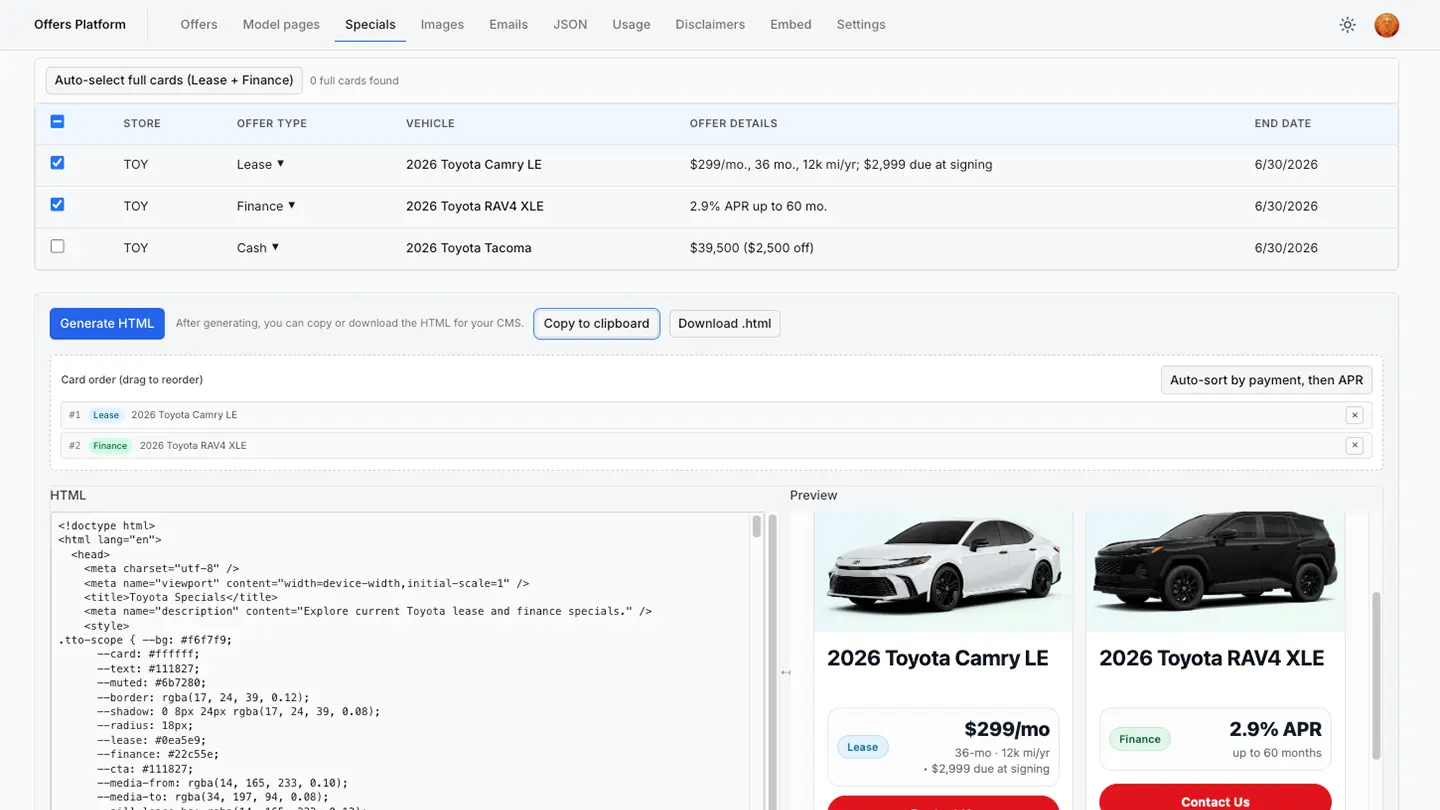
Promotions Content Engine

One intake, many outputs: pages, emails, banners, compliant disclaimers

  • Visual promo creative at scale
  • Template-based promo images with dynamic text overlays via Photoshop scripting
  • Custom HTML/CSS rendering

Implemented with

  • Next.js
  • Supabase
  • Postgres
  • Vercel
  • TypeScript
  • Python (AI-assisted)
  • Playwright
  • GitHub
  • VS Code
  • Cursor
  • Claude Code
  • Cloudflare
Read the case study
WordPress · GIS

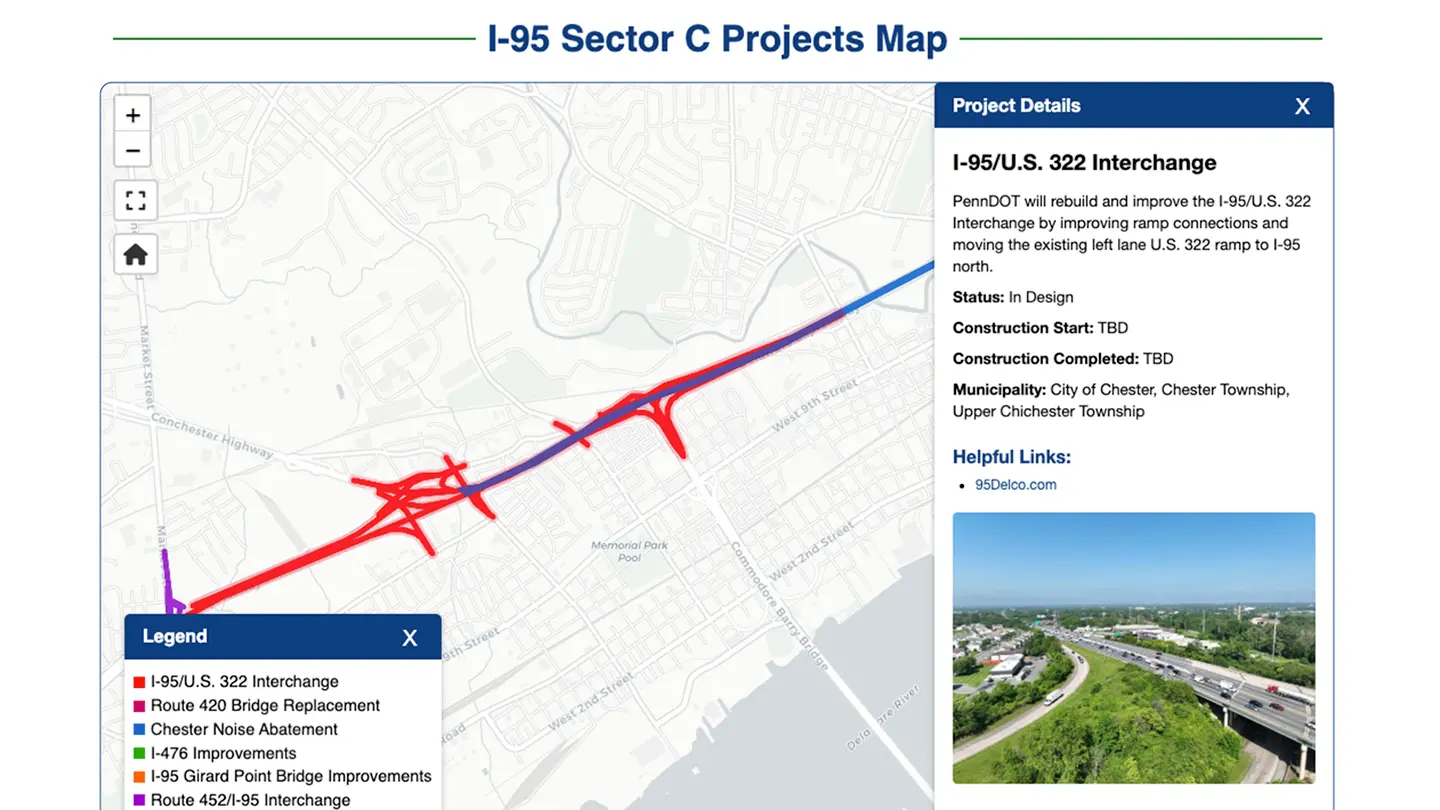
PennDOT Program Projects Map

Interactive current-projects map for a PennDOT program and I-95

  • Integrates PennDOT API
  • Responsive UI
  • Click-to-view project details

Implemented with

  • WordPress
  • PennDOT API
  • JavaScript
  • GIS data
  • cPanel
Read the case study
Spreadsheet Systems

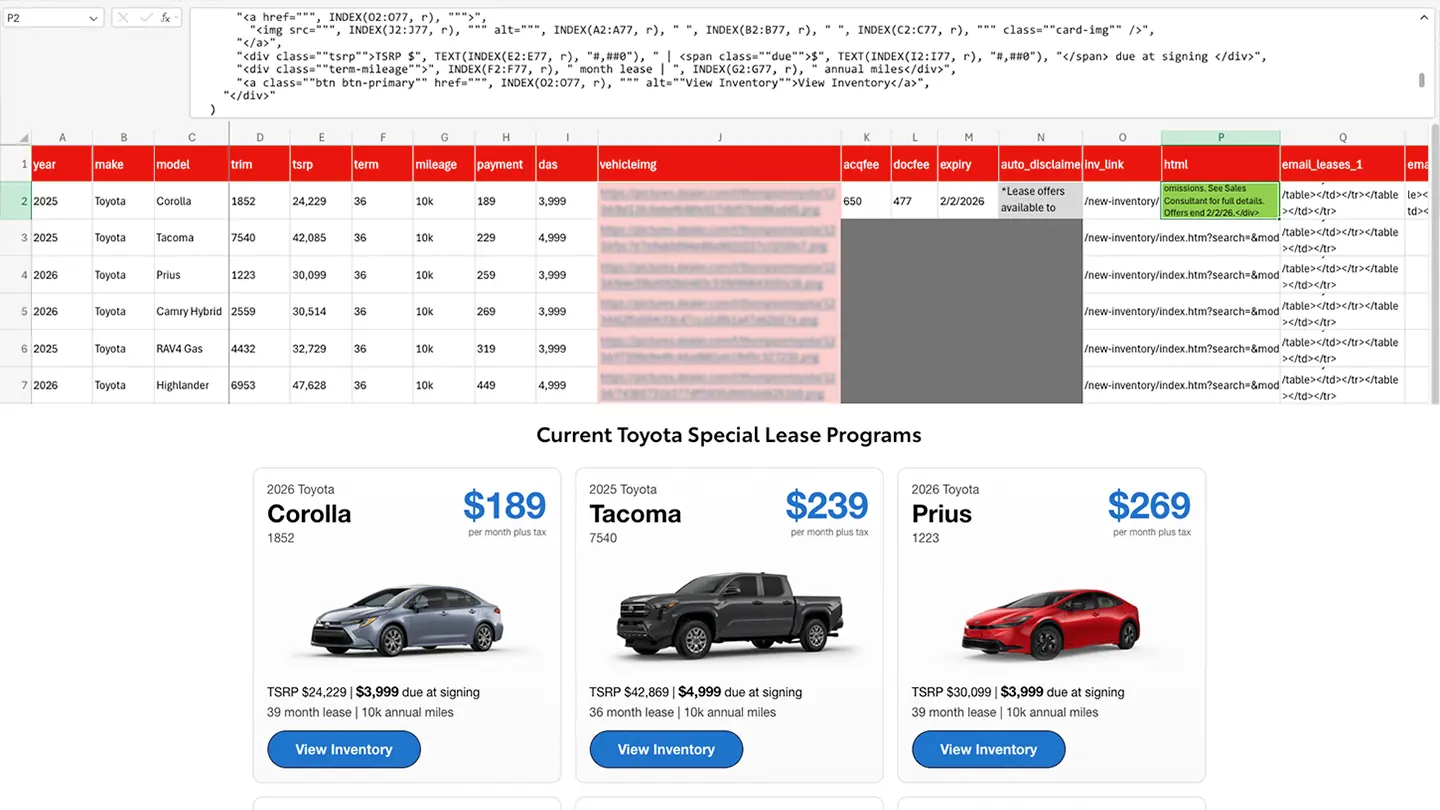
Spreadsheet-Driven Promo Generators

Rules-based Excel formulas (no macros) that publish specials pages

  • Turns recurring monthly offer data into publish-ready specials pages
  • Generates compliant disclaimer text
  • Built-in validation

Implemented with

  • Excel
  • HTML
  • CSS
Read the case study
Lexus Toyota BMW Volkswagen Audi Porsche Alfa Romeo Maserati PennDOT

Case Studies

Promotions Content Engine

Outcome

One structured intake produces pages, emails, banners, and compliant disclaimers. Promo production time is down about 90%: a full monthly kit for 4 stores in about 3 hours, with landing pages in about 20 minutes each, including publishing. Promo email build time is down about 92%, from about 4 hours to about 20 minutes per campaign.

Architecture

  1. Structured intake
  2. Postgres data model
  3. Validation rules
  4. Content, creative & intelligence

How It Works

Offer details are captured once through a single structured intake. The app models that intake as data in Postgres (via Supabase), then renders every downstream asset from shared templates: HTML/CSS landing pages, responsive emails, and promo banners. Visual creative is produced at scale using template-based images with dynamic text overlays driven by Photoshop scripting. Publishing is handled through the app and its hosting/DNS layer.

Guardrails

  • Compliant disclaimers generated from the same structured data, not hand-written per asset.
  • Validation on intake so incomplete or malformed offers never reach production.
  • Shared templates keep every output on-brand and consistent across channels.
  • Automated end-to-end checks with Playwright before publishing.

Stack

  • Next.js
  • Supabase
  • Postgres
  • Vercel
  • TypeScript
  • Python
  • Playwright
  • GitHub
  • VS Code
  • Cursor
  • Claude Code
  • Adobe Creative Cloud
  • Cloudflare (DNS/SSL)

Screenshots

Promotions Content Engine screenshot

PennDOT Program Projects Map

Outcome

A self-contained WordPress plugin that uses JavaScript to integrate the PennDOT API into an interactive current-projects map for a PennDOT program and I-95, with click-to-view project details in a responsive UI.

Architecture

  1. PennDOT API
  2. JavaScript + GIS shaping
  3. Interactive map
  4. Map & project details

How It Works

JavaScript fetches live project data from the PennDOT API and shapes GIS features for the map in the browser. Those features render onto an interactive, responsive map inside a self-contained WordPress plugin. Selecting a project opens its details inline, so users can explore current work along the corridor without leaving the page.

Guardrails

  • Live API data keeps the map current without manual updates.
  • Responsive UI works across desktop and mobile viewports.
  • Packaged as a self-contained WordPress plugin for maintainable deployment.

Stack

  • WordPress
  • PennDOT API
  • JavaScript
  • GIS data

Screenshots

PennDOT Program Projects Map screenshot

Spreadsheet-Driven Promo Generators

Outcome

Rules-based Excel formulas (no macros) turn recurring monthly offer data into publish-ready specials pages, compliant disclaimer text, and validation. No manual page building required. This was truly the prototype that led to the Promotions Content Engine.

Architecture

  1. Offer data intake
  2. Formula-driven transforms
  3. Validation rules
  4. Publish-ready specials page

How It Works

Recurring monthly offers are entered as structured rows. Rules-based Excel formulas (no macros) transform that data into publish-ready specials page HTML and the matching compliant disclaimer text. Validation formulas flag missing or inconsistent values before anything is copied out, so the output is ready to ship as soon as the data checks out.

Guardrails

  • No macros. Portable, low-maintenance, and safe to open anywhere.
  • Disclaimer text is derived from the same rules as the offers, keeping it compliant.
  • Validation catches bad data before it becomes a published page.

Stack

  • Excel
  • HTML
  • CSS

Screenshots

Spreadsheet-Driven Promo Generators screenshot

I don't just build websites. I build systems that cut monthly promo production time by about 90%.

Skills / Stack

The tools I use to design, build, and ship content operations.

Front-End / Web

  • Semantic HTML
  • CSS
  • JavaScript
  • Responsive UI
  • TypeScript
  • Next.js
  • Accessibility
  • CSS Grid & Flexbox
  • Core Web Vitals
  • Component Architecture

Data / Backend / Automation

  • Supabase
  • Vercel
  • APIs
  • Python
  • WordPress Plugins
  • PHP
  • Google Apps Script
  • Playwright
  • cPanel
  • Postgres

Marketing Systems / SEO

  • Process Optimization
  • Technical SEO
  • Email Development
  • Structured Data
  • GA4
  • Data Studio
  • Google Search Console
  • Semrush
  • Paid Search
  • Social Media Ads
  • Content Marketing

Tools / Workflow

  • Claude Code
  • Cursor
  • Gemini
  • Veo
  • VS Code
  • GitHub
  • Figma
  • Adobe Creative Cloud
  • Cloudflare
  • Shopify
  • Excel
  • ElevenLabs
  • Notion
  • Slack

Yes, I actually enjoy this stuff.

I build the systems behind marketing, not just the campaigns. My work sits where marketing operations, front-end development, automation, SEO, content systems, and design judgment overlap, turning recurring, manual production into structured, reusable content operations.

The pattern is always the same: find the repetitive work, model it as data, and build a system that produces consistent, compliant output quickly. One structured intake can drive landing pages, emails, banners, and disclaimers, with validation checks so the result is right every time, not just the first time.

I care about craft as much as efficiency. A system that runs fast but produces sloppy output isn't finished. I hold the details (clean markup, accessible interfaces, accurate structured data, on-brand creative) to the same standard as the automation that generates them.

If a task happens every week, it should be part of an automated workflow, not someone's recurring homework.

Jeremy Ralston

That's me, Jeremy Ralston.

From pixels to pipelines. How I got here:

  1. Designed print, web, and motion work for clients. Built the visual craft that still grounds every system I ship.
  2. Built responsive sites and front-end interfaces. Turned design into clean markup, accessible UI, and maintainable code.
  3. Ran campaigns across search, email, and social. Connected creative work to measurable performance and conversion goals.
  4. Turned campaign and site data into clear insights. Linked marketing strategy to reporting, tagging, and optimization.
  5. Building automation systems that turn recurring marketing work into structured, reusable content operations.

Contact

Tell me about the marketing work your team keeps redoing by hand.

Email
jeremy@ralstondigital.com
LinkedIn
linkedin.com/in/jeremyralston
GitHub
github.com/docralston
Location
Remote US or hybrid within 30 minutes of Quakertown, PA